
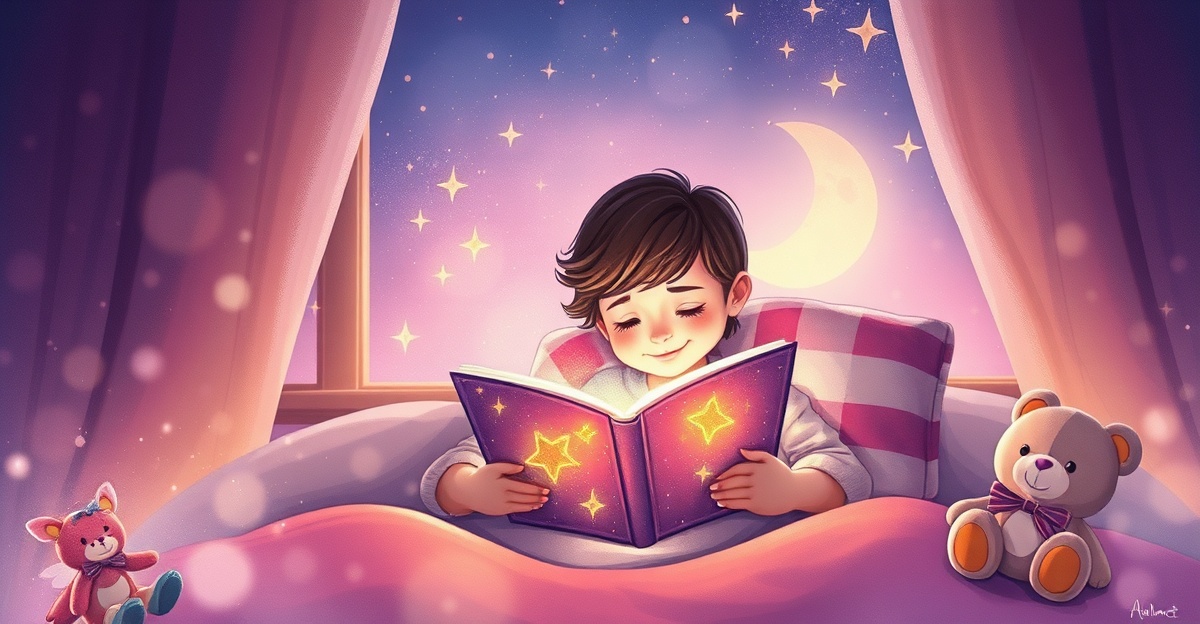
Why Personalised Bedtime Stories Help Children Love Reading
The short answer
When children hear their own name and familiar details, stories feel for them, not generic. That small shift increases attention, recall, and positive associations with books.
Why it works
Bedtime is emotional: children are tired, boundaries are tested, and routines matter. A predictable story shape plus personal hooks gives their brain something steady to land on. You are not replacing picture books—you are adding a format that fits nights when the shelf feels tired too.
Practical tips
- Keep length honest: match the story length to their energy, not your ideal.
- Repeat favourites: repetition is a feature for toddlers, not a bug.
- Pair with print when you can: personalised digital stories can sit alongside a physical book routine.
Try it tonight
Create one short calm story, read it in the same chair each night for a week, and notice whether settling feels easier. With My Story Wish you can generate a new illustrated story whenever you need a fresh voice at bedtime.
Related Articles
Interactive Stories for Kids: Why Choose-Your-Path Tales Still Work
Tap-to-choose stories build agency and re-read value. Here is the developmental upside—and when to use them.
The Perfect Bedtime Routine for Toddlers (That You Can Actually Keep)
A simple sequence: wind-down, story, lights out—plus how personalised calm stories fit in.
10 Ways to Get Your Child Interested in Reading (Ages 2–8)
Low-pressure habits that build curiosity: choice, routine, silly voices, and stories that reflect their world.
Ready to Create Personalised Stories?
Start creating personalised stories your family can read, listen to, and share anywhere.
Get Started Free